
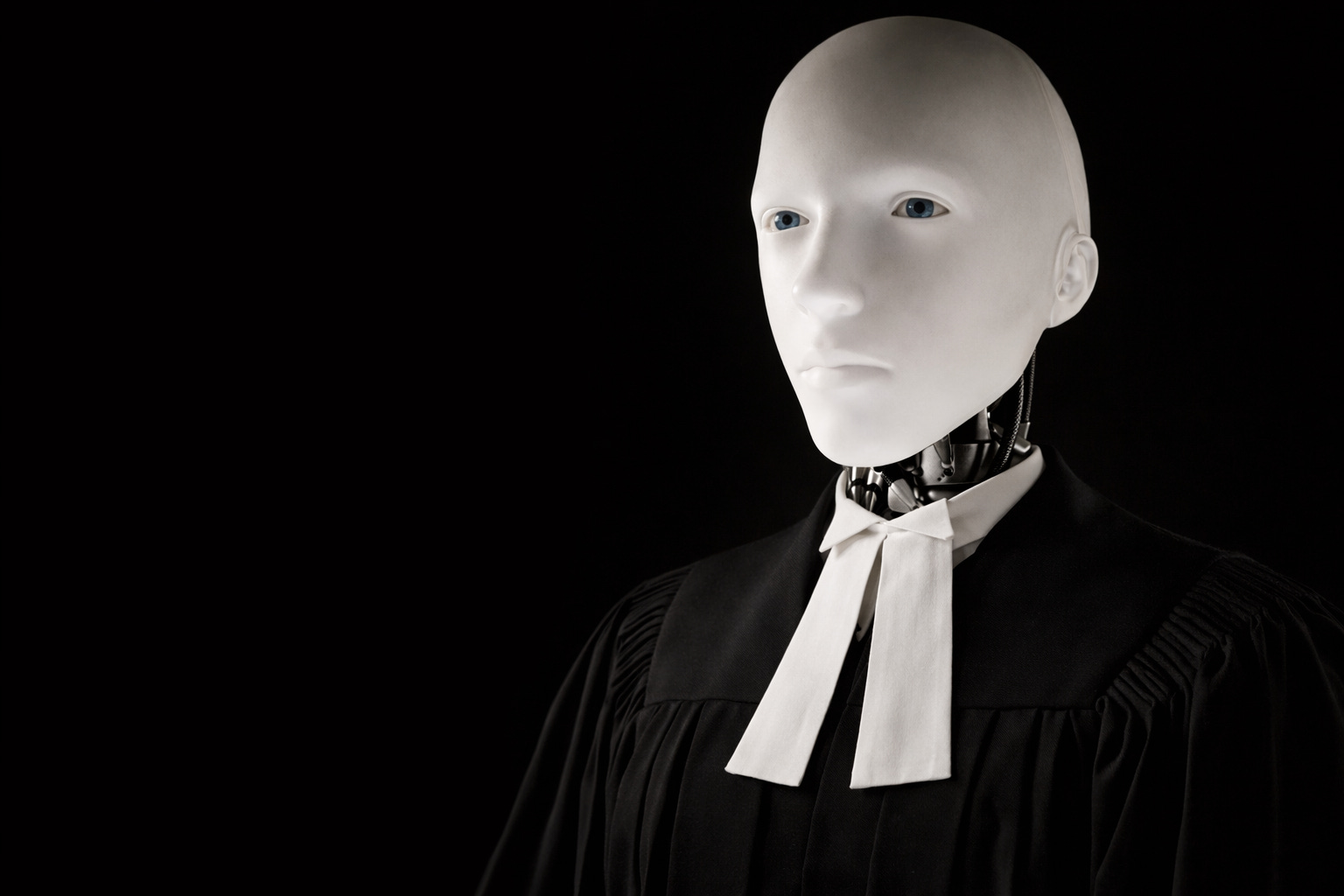
Not long ago, I received a call from a young lawyer about a file. Before the conversation even began, a recorded message announced that artificial intelligence software was recording and transcribing the call.
I stopped the discussion immediately.
I told counsel that if the conversation was being recorded by an AI system, I would not proceed. If the software remained active, the call would have to end.
The exchange lasted only a moment, but for me it highlighted a developing issue within the legal profession. Artificial intelligence tools capable of recording, transcribing, summarizing, and analyzing conversations are now being integrated into everyday legal practice. Some operate through videoconferencing platforms. Others run in the background of telephone systems or digital assistants that promise automated note-taking and file summaries.
These tools are often marketed as harmless productivity aids. But from the vantage point of a mediator whose work depends on candid, confidential conversations, the presence of artificial intelligence silently recording legal discussions raises profound ethical questions.
Mediation operates on trust. If participants begin to wonder whether an unseen technological listener is capturing every word, the foundation of the process begins to erode.
Confidentiality: The Cornerstone of Both Mediation and Legal Practice
The starting point for any ethical analysis is the lawyer’s duty of confidentiality.
In Ontario, Rule 3.3-1 of the Law Society of Ontario Rules of Professional Conduct provides that a lawyer “shall hold in strict confidence all information concerning the business and affairs of the client acquired in the course of the professional relationship and shall not divulge any such information unless authorized by the client or required by law.”
This obligation extends well beyond formal solicitor-client communications. Lawyers routinely receive confidential information in discussions with opposing counsel, insurance adjusters, experts, and mediators. Those conversations frequently involve litigation strategy, settlement positions, or candid assessments of risk.
When artificial intelligence tools are used to record or transcribe those discussions, an additional participant is effectively introduced into the conversation: the technology provider operating the software.
Most AI transcription systems process conversations through remote servers. Audio files may be transmitted, analyzed, and stored by third-party platforms. Even where those services promise security, the lawyer must ask a fundamental ethical question: has confidential information now been shared beyond the participants who were originally intended to hear it?
The duty of confidentiality requires lawyers to take reasonable steps to prevent the inadvertent disclosure of client information. Introducing automated recording software into professional conversations may expose that information to risks that were never present when lawyers simply took notes.
From a mediator’s perspective, this concern is particularly acute. The mediation process depends on participants speaking candidly in private caucuses. If parties begin to suspect that conversations are being recorded or transmitted to external systems, the willingness to speak openly disappears.
Solicitor-Client Privilege and the Risks of AI Recording
The ethical concerns are even more serious when artificial intelligence tools are used during communications between lawyers and their clients.
Solicitor-client privilege occupies a unique and protected position in Canadian law. The Supreme Court of Canada has repeatedly emphasized that the privilege is a principle of fundamental justice and must remain “as close to absolute as possible.” See Canada (Privacy Commissioner) v. Blood Tribe Department of Health, 2008 SCC 44[1].
Privilege depends on confidentiality. If a privileged communication is shared with a third party, the protection may be weakened or lost.
When a lawyer records a client conversation using AI software that transmits data to an external platform, the lawyer must carefully consider whether that communication remains confidential. Even if the technology provider claims that the information is encrypted or secure, the fact remains that the conversation has been transferred outside the lawyer’s direct control.
Data breaches, unauthorized access, and unintended data retention are now common features of the digital landscape. A lawyer who records privileged conversations with AI tools may inadvertently create a vulnerability in the very communications that privilege is meant to protect.
From my mediator’s seat, these risks are deeply troubling. Clients frequently disclose sensitive information during mediation that they would never reveal in open court. If those conversations are being recorded or processed by artificial intelligence systems, the integrity of the process is placed at risk.
Technology Competence and the Lawyer’s Ethical Responsibilities
Modern legal ethics also recognize that lawyers must understand the technologies they use.
Commentary to Rule 3.1-2 of the Rules of Professional Conduct[2] emphasizes that lawyers must maintain competence not only in the law but also in the technologies relevant to their practice. The commentary notes that lawyers should understand the “benefits and risks associated with relevant technology.”
Artificial intelligence recording systems present exactly the type of technological risk contemplated by this obligation.
Lawyers who activate AI recording tools without fully understanding where the data is stored, how it is processed, or who may ultimately access it may be exposing confidential information without realizing it.
Competence in the modern era requires more than knowing how to use the software. It requires understanding how that software interacts with the ethical obligations that govern the profession.
Professional Courtesy Between Counsel
There is another dimension to the issue that mediators see every day, that of professional trust between lawyers.
The legal profession has long relied on informal discussions between counsel to resolve procedural issues, narrow disputes, and explore settlement possibilities. Many of these conversations occur outside the formal record. Lawyers speak candidly, sometimes tentatively, in order to test ideas or gauge the other side’s position.
Introducing artificial intelligence recording into those discussions fundamentally alters the dynamic.
Even where the recording is disclosed at the beginning of the call, the presence of an automated transcript changes the character of the conversation. Lawyers become more guarded. They choose their words carefully. Exploratory discussions give way to rehearsed positions.
From the standpoint of mediation, this development is deeply counterproductive. Effective mediation depends on lawyers being able to speak frankly about the strengths and weaknesses of their cases. If every conversation risks becoming a permanent digital record, those candid exchanges become far less likely.
The result is predictable. Negotiations become slower, more rigid, and more adversarial.
Privacy Law and Recording Conversations in Canada
Canadian law does permit the recording of conversations in certain circumstances.
Section 184 of the Criminal Code establishes what is commonly referred to as the “one-party consent” rule. Under this provision, it is not illegal to record a private communication if one of the participants to the conversation consents to the recording[3].
In practical terms, this means that a participant in a conversation can lawfully record it without informing the other party.
But legality and professional ethics are not the same thing.
The fact that a lawyer may legally record a conversation does not mean that doing so is consistent with the lawyer’s professional obligations. Ethical duties concerning confidentiality, privilege, and professional courtesy often demand a higher standard than the minimum required by criminal law.
From a mediator’s perspective, the mere possibility that conversations could be recorded without notice is enough to chill open discussion.
Mediation is intended to create a confidential environment in which parties can explore resolution without fear that their words will later be used against them. The widespread use of AI recording tools risks undermining that expectation.
The Mediator’s Perspective: Protecting the Integrity of the Process
As a mediator, my role is to create a space where lawyers and their clients can speak openly about their disputes.
That space depends on trust that conversations in mediation will remain confidential, trust that discussions between counsel will not be preserved outside the process, and trust that the participants in the room are the only listeners.
Artificial intelligence recording tools challenge that assumption.
Even when disclosed, they introduce uncertainty about how conversations will be stored, who may later access them, and how they may ultimately be used. For participants who are already navigating a difficult dispute, that uncertainty can make candid discussion far more difficult.
For that reason, I take a straightforward approach. If I am speaking with counsel, adjusters, or other professionals about a file, and an AI system is recording the conversation, I will not proceed with the discussion.
This is not a rejection of technology. Artificial intelligence will undoubtedly play an increasing role in legal practice.
But the legal profession has always depended on certain professional norms, that of confidentiality, privilege, discretion, and trust between participants in the justice system.
Those norms deserve careful protection.
Technology may change the tools lawyers use, but it should not quietly change the ethical foundations on which the profession rests.
[1] https://decisions.scc-csc.ca/scc-csc/scc-csc/en/item/6194/index.do
[2] https://lso.ca/about-lso/legislation-rules/rules-of-professional-conduct/chapter-3
[3] Criminal Code, RSC 1985, c C-46, s. 184: https://www.canlii.org/en/ca/laws/stat/rsc-1985-c-c-46/latest/rsc-1985-c-c-46.html