
UPDATE (April 24, 2026)
The Supreme Court of Canada has now released its decision in Riddle v. Ivari, dismissing the appeal and effectively affirming the approach taken by the Quebec Court of Appeal.
That outcome matters.
It confirms that a declaration of death is not a permanent legal endpoint. It is a rebuttable construct. Where credible and reliable evidence establishes that the individual is alive, the law must yield to that reality, even years after rights have been organized on the assumption of death.
In practical terms, the Supreme Court has chosen accuracy over finality.
For insurers, that means the concept of a “closed file” in death claims is more fragile than it appears. For estates, it introduces a lingering vulnerability in distributions made in reliance on a declaration that may later be undone. And for those of us working in the middle of these disputes, it reinforces a familiar truth that cases built on uncertain facts do not stabilize with time. They remain volatile.
The analysis below was written before the decision was released. The Court has now spoken. The tension identified here remains, but the direction is clear.
Original Article
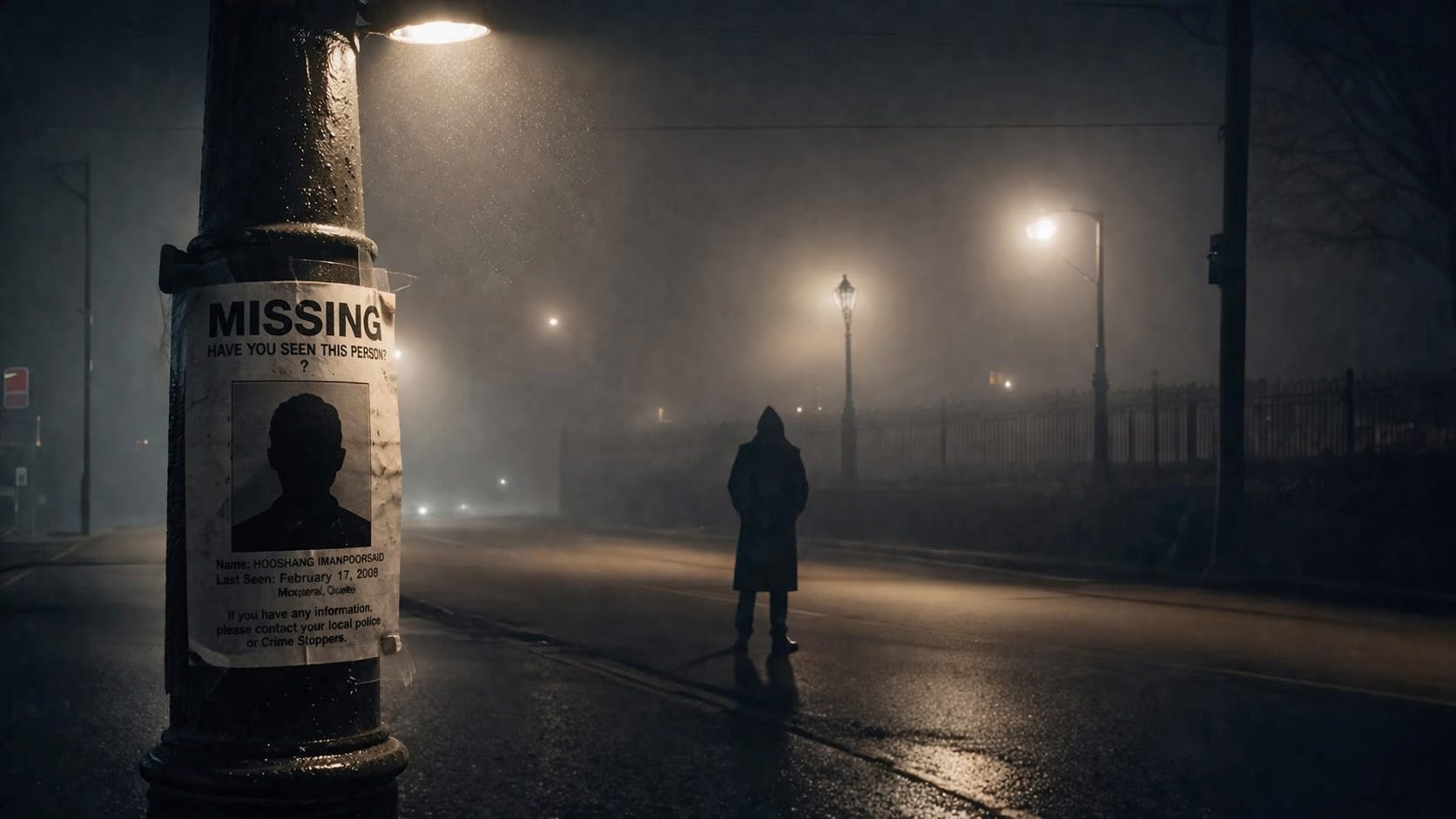
There is something deeply unsettling about a case where the law declares a person dead and then, years later, the evidence suggests otherwise. That is the tension at the heart of Riddle v. Ivari (aka Re Imanpoorsaid, 2023 QCCA 1111). It is not just a case about disappearance. It is a case about what happens when the legal system, which depends on certainty, collides with facts that refuse to cooperate.
The Riddle
The story begins in a familiar place. A man disappears. He leaves behind a family, financial problems, and a trail that quickly goes cold. Time passes. Years pass. Eventually, the law does what it is designed to do in these situations. It steps in and imposes order. After seven years of absence, a court issues a declaratory judgment of death. From that moment forward, the legal fiction becomes reality. The estate can be administered. Rights crystallize. Insurance claims move forward. The system, in effect, closes the file.
But what if the file should never have been closed? That is the riddle with Riddle. The Quebec Court of Appeal[1] confronted that problem directly in the decision now under review by the Supreme Court of Canada[2].
The evidentiary record before it was not speculative. It was not based on rumour or inference. It consisted of documentary evidence originating from Iranian state sources including passport records, civil registry information, and social assistance documentation, all pointing to the same conclusion: the individual who had been declared dead in Quebec was, in fact, alive and living abroad. The issue was not simply whether that evidence was persuasive. The issue was more fundamental. What does it take to undo death in the eyes of the law?
The Court of Appeal’s answer was clear, and in some respects, inevitable. A declaratory judgment of death is a legal construct. It is grounded in absence, not proof. It is a necessary tool, one that allows families, estates, and insurers to move forward when reality provides no answers. But it is still a fiction. And like any fiction, it must yield to reality when reality becomes known.
The Court rejected the idea that “return” requires a physical reappearance. That argument, while superficially attractive, collapses under scrutiny. If the law required a missing person to physically walk back into the jurisdiction to undo a declaration of death, it would create precisely the kind of absurd result the law is meant to avoid. A person could be alive, demonstrably so, and yet remain legally dead simply by staying out of reach.
The Court refused to accept that.
Instead, it held that credible, reliable evidence of life wherever in the world that life may be, can be sufficient to reverse the presumption. In doing so, it emphasized something that often gets lost in legal analysis. The civil status registry is meant to reflect reality, not perpetuate error. That is the pivot point in the case. But the real significance of Riddle does not lie in the abstract. It lies in what this means for the systems that depend on the declaration of death.
The Insurance Angle
Insurance is one of them. Life insurance, in particular, is built on a binary premise. Either the insured is alive, or they are not. The entire structure of the product depends on that distinction. Benefits are paid when death is established. Files are closed. Risk is quantified and contained. Riddle exposes the fragility of that assumption. If a declaration of death can later be undone on the basis of foreign documentary evidence that may surface years after a payout would ordinarily have been made, then the concept of finality begins to erode. Insurers are no longer dealing with a closed system. They are dealing with an open one, where new information can fundamentally alter the outcome long after the fact.
That is not a theoretical concern. It is a practical one. It changes how these cases must be investigated. It changes how risk must be assessed. And it introduces a level of uncertainty into death claims that the industry has historically tried to avoid.
The Estates Angle
Estates law faces the same problem from a different angle. The administration of an estate depends on closure. Assets are gathered. Debts are paid. Distributions are made. Executors are expected to move the process forward with diligence, but also with confidence that the legal foundation is stable. A declaration of death provides that foundation. Or at least, it is supposed to. Riddle suggests that the foundation may not be as solid as we once thought. If the legal status of death can be revisited and if it can be undone based on evidence that emerges later, then every step taken in reliance on that status becomes potentially vulnerable.
Distributions made in good faith may be called into question. Rights that appeared settled may be reopened. The risk does not disappear simply because time has passed. It lingers.
The Mediation Lens
From a mediator’s perspective, this is where the case becomes particularly interesting. Disputes like this are inherently unstable. They do not turn on a clean legal issue. They turn on the credibility of evidence that sits at the edge of certainty. Documentary records from foreign jurisdictions. Conflicting inferences. Gaps that cannot be fully closed. That kind of case does not lend itself to confident predictions at trial. And where there is no confidence, there may be movement. The value of the case can shift dramatically depending on how a court views the evidence. One piece of documentation can change everything. One inference can tip the balance. The range of possible outcomes is wide, and that creates both risk and opportunity. These are precisely the kinds of cases where early, thoughtful resolution should be on the table. Not because the issues are simple, but because they are not.
SCC
The Supreme Court of Canada now has the final word, and the decision can come any time. It can affirm the Court of Appeal’s approach, embracing a flexible, reality-driven standard that prioritizes truth over finality. Or it can tighten the framework, emphasizing the need for certainty and limiting the circumstances in which a declaration of death can be revisited. Either path has consequences. One favours accuracy, even at the cost of reopening settled matters. The other favours stability, even at the risk of entrenching a legal fiction. There is no perfect answer.
Cases like Riddle remind us of something the law does not always acknowledge openly. The system is built to impose order on uncertainty. It creates rules, presumptions, and timelines designed to bring closure to events that are, by their nature, unresolved. But sometimes, the facts refuse to cooperate. A person disappears. The law declares them dead. And then, years later, the evidence suggests they were never gone at all.
The law can declare someone dead. Reality does not always agree.
To be continued…
[1] https://www.canlii.org/fr/qc/qcca/doc/2023/2023qcca1111/2023qcca1111.html
[2] https://www.canlii.org/en/ca/scc-l/doc/2024/2024canlii43100/2024canlii43100.html