
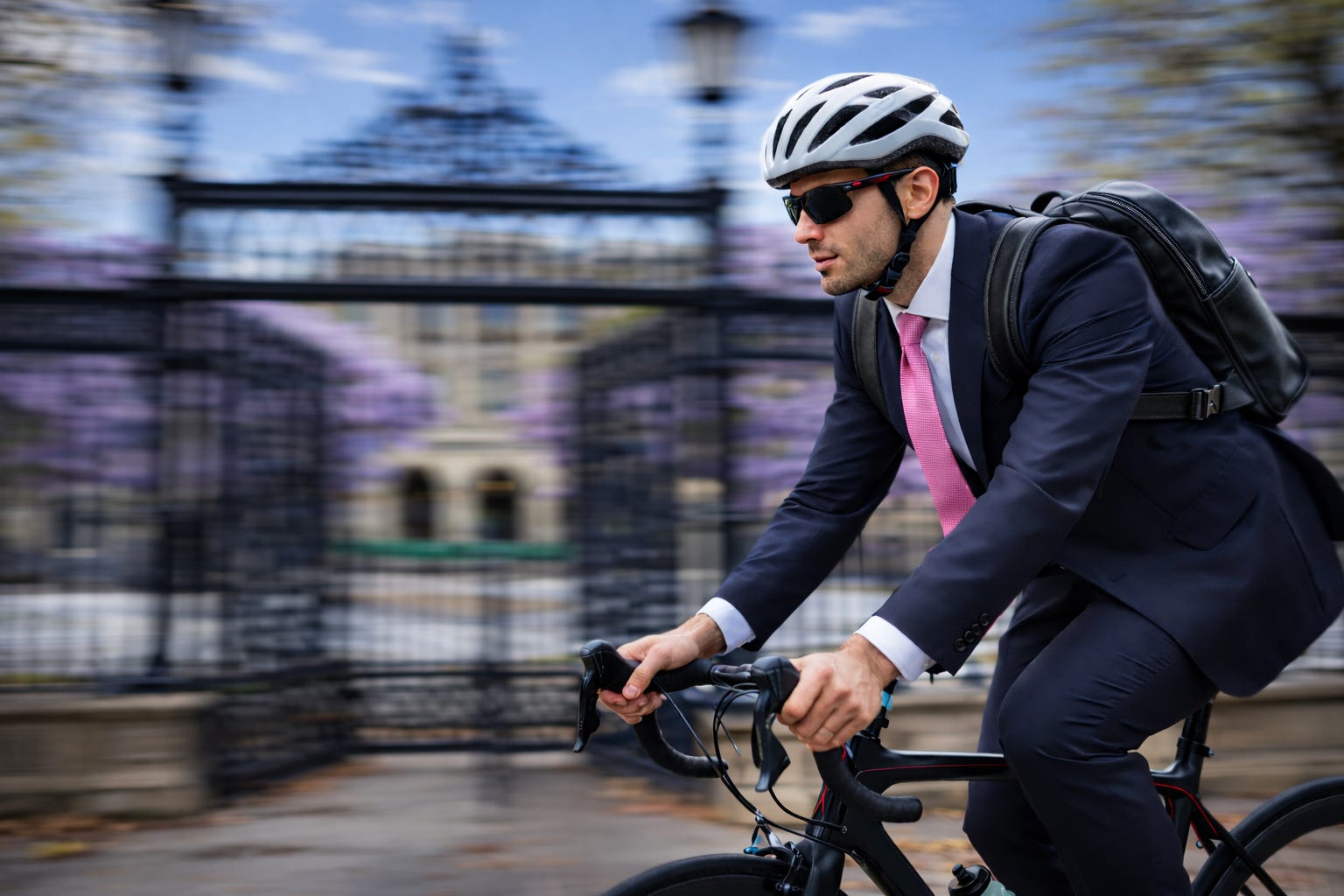
The Changing Landscape of Urban Cycling
I have recently mediated cases involving bicycles and cars. I’ll say this. When steel hits flesh, it is often so much worse than when steel hits steel.
Over the past decade, cycling has moved from the margins of urban transportation to the centre of municipal planning across Ontario. Dedicated bike lanes, cycling advocacy, and environmental policy have encouraged more people to use bicycles for commuting, recreation, and short-distance travel. Cities such as Toronto now see thousands of daily cycling trips across increasingly complex road networks.
This growth has inevitably produced more litigation involving cyclists. Bicycle accident cases present a distinctive set of legal and evidentiary challenges that differ in important ways from conventional motor vehicle litigation. Cyclists are neither pedestrians nor motorists. They occupy an unusual legal space as vulnerable road users who nevertheless operate vehicles within the meaning of Ontario traffic law.
For mediators, litigators, and insurers, these files require careful attention to issues that do not arise in typical two-vehicle collisions. Questions surrounding road positioning, visibility, infrastructure design, helmet use, and driver expectations often become central to both liability and damages. The result is a category of cases where factual nuance can matter as much as legal doctrine.
Cyclists as “Drivers” Under Ontario Law
I found when I was in practice that one of the first legal realities that often surprises people involved in bicycle accident litigation is that cyclists are generally treated as drivers under Ontario’s Highway Traffic Act[1]. With limited exceptions, cyclists are expected to follow the same traffic rules as motorists obeying traffic signals, stopping at stop signs, signaling turns, and yielding where required.
This legal framework shapes how courts analyze fault. When a cyclist enters an intersection against a signal, fails to stop at a stop sign, or rides against traffic, courts will assess liability through the same negligence principles applied to motorists.
The core negligence framework remains the familiar one articulated by the Supreme Court of Canada. Liability arises where a defendant breaches the standard of care and causes foreseeable harm. In Athey v. Leonati ([1996] 3 SCR 458[2], the Court reaffirmed that a defendant is liable where their negligence materially contributes to the injury, even if other factors are also present. Although that case involved personal injury in a different context, the principles governing causation apply directly to motor vehicle and cycling collisions.
For bicycle litigation, this framework means that fault rarely turns on abstract legal doctrine. Instead, it depends on detailed reconstruction of the events leading up to the collision.
The Visibility Problem
Visibility frequently becomes the central issue in bicycle accident litigation. Drivers often state that they “never saw” the cyclist prior to impact. Whether that explanation is credible depends on the surrounding circumstances including lighting conditions, the cyclist’s clothing, the presence of bike lights, road geometry, traffic congestion, and the speed of both parties.
Courts approach these cases by asking whether a reasonable driver exercising proper vigilance would have seen the cyclist in time to avoid the collision. This analysis mirrors the broader negligence principle articulated in Resurfice Corp. v. Hanke, 2007 SCC 7[3], where the Supreme Court emphasized that causation analysis ultimately turns on whether the defendant’s conduct was a factual cause of the injury.
In cycling cases, this often becomes a practical question of perception and reaction time. If the cyclist was plainly visible and lawfully occupying the roadway, courts may view a driver’s failure to observe them as evidence of inattentive driving. Conversely, if the cyclist entered the driver’s path suddenly or rode unpredictably between lanes, liability may shift significantly toward the cyclist.
These fact-specific inquiries explain why accident reconstruction evidence can become disproportionately important in bicycle litigation.
Road Positioning and Lane Use
Unlike motor vehicles, bicycles can legally occupy a wide range of positions within the roadway. Cyclists may ride near the right edge of the lane, within a marked bike lane, or in some circumstances take the full lane where safety requires it.
Conflicts frequently arise when motorists believe cyclists should remain as far right as possible. That assumption does not always reflect the legal reality. Cyclists may move toward the centre of a lane to avoid hazards, prepare for a turn, or increase their visibility.
From a litigation standpoint, disputes about lane positioning often become disputes about foreseeability. Could the driver reasonably anticipate a cyclist occupying that part of the roadway? Or did the cyclist behave in a way that created an unexpected hazard?
Because cycling infrastructure varies widely across municipalities, these questions often involve careful examination of the road design itself.
Infrastructure and Municipal Liability
As cycling increases, so does the role of infrastructure in bicycle accident claims. Poorly designed bike lanes, missing signage, inadequate pavement maintenance, and hazardous road features can all contribute to collisions.
In such cases, municipalities may be drawn into the litigation under allegations of negligent road design or maintenance. These claims engage the well-developed body of Canadian law governing public authority liability.
The Supreme Court of Canada addressed the general framework for municipal negligence in Just v. British Columbia, [1989] 2 SCR 1228[4]. The Court distinguished between policy decisions, which are generally immune from liability, and operational decisions, which may attract negligence liability if implemented carelessly.
In the cycling context, that distinction can become critical. Decisions about whether to install bike lanes may be considered policy choices. However, the negligent maintenance of existing cycling infrastructure may fall squarely within the operational sphere.
For litigators, this creates a second layer of complexity. Bicycle cases sometimes evolve into multi-party disputes involving drivers, municipalities, and occasionally contractors responsible for road work. I have been counsel in many on both sides.
Contributory Negligence and the Vulnerable Road User
Even when drivers are found negligent, courts frequently assess whether cyclists contributed to the accident. Factors such as failure to wear reflective clothing at night, riding without lights, sudden lane changes, or unsafe passing between vehicles may lead to findings of contributory negligence.
Ontario’s Negligence Act[5] allows courts to apportion fault between parties according to their relative responsibility for the accident. In practice, bicycle accident cases often produce shared liability findings.
This can create an uneasy tension in the law. Cyclists are physically vulnerable in ways motorists are not. Yet the legal framework does not automatically favour them. Courts still evaluate their conduct according to the same objective standard of reasonable care.
From my seat as mediator, this dynamic often becomes the central negotiation issue. Plaintiffs emphasize vulnerability and driver responsibility. Defendants focus on unpredictability and shared fault. The eventual settlement frequently reflects a compromise between those competing narratives.
The Role of Helmets and Injury Severity
Another recurring issue in bicycle litigation concerns helmet use. Ontario law requires helmets for cyclists under eighteen, but not for adults[6]. Nevertheless, defence counsel sometimes argue that failure to wear a helmet constitutes contributory negligence where head injuries occur.
Courts will approach this argument cautiously. The question is not whether helmets are generally advisable, but whether the absence of a helmet materially contributed to the specific injury suffered. Medical evidence often becomes decisive on this issue.
From a damages perspective, bicycle accident cases frequently involve severe injuries relative to typical motor vehicle collisions. Cyclists lack the protective structure of a vehicle, making them vulnerable to fractures, head trauma, and spinal injuries even at moderate speeds.
As a result, these cases can involve substantial damages claims despite relatively modest property damage.
Mediation Dynamics in Bicycle Cases
From a mediator’s perspective, bicycle accident cases often hinge on narrative credibility rather than purely technical legal issues. Each side typically arrives at mediation with a sharply different reconstruction of the accident.
Drivers often describe a sudden and unexpected appearance of the cyclist. Cyclists often describe a driver who failed to yield, turned across their path, or opened a vehicle door without looking.
I have found that independent witnesses are rare in these cases, so liability assessments frequently depend on circumstantial evidence. Photographs of the roadway, surveillance footage, cyclist equipment, and police accident reports can become disproportionately influential.
Effective mediation in these cases therefore requires careful exploration of risk. Even where one party appears confident in their version of events, the uncertainty of trial outcomes can be substantial.
Conclusion
Bicycle accident litigation sits at the intersection of traditional negligence law and the evolving realities of modern urban transportation. As cycling continues to expand across Ontario, these cases are likely to become more common in both the courts and mediation rooms.
For lawyers and mediators, the key is recognizing that bicycle cases demand a different analytical lens. Issues of visibility, infrastructure, vulnerability, and shared responsibility often shape the outcome more than abstract legal doctrine.
Understanding these special considerations allows practitioners to approach these disputes with a clearer sense of both legal risk and practical resolution pathways.
[1] https://www.ontario.ca/laws/statute/90h08
[2] https://www.canlii.org/en/ca/scc/doc/1996/1996canlii183/1996canlii183.html
[3] https://www.canlii.org/en/ca/scc/doc/2007/2007scc7/2007scc7.html
[4] https://www.canlii.org/en/ca/scc/doc/1989/1989canlii16/1989canlii16.html
[5] https://www.ontario.ca/laws/statute/90n01
[6] Highway Traffic Act, R.S.O. 1990, c. H.8, s. 104(2.1)–(2.2), requiring cyclists under eighteen years of age to wear an approved bicycle helmet.