
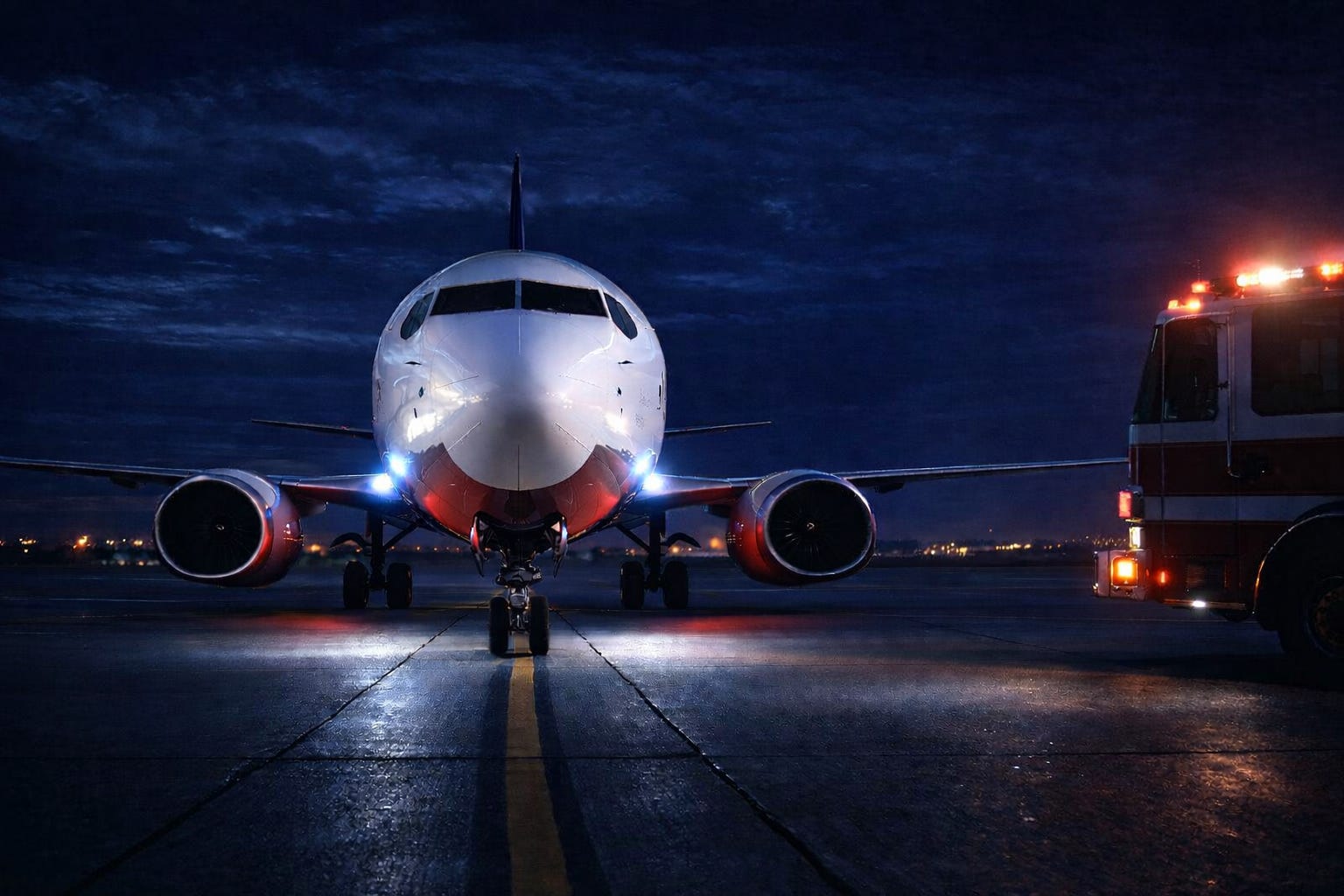
News of a recent ground collision involving Air Canada at a New York airport where an aircraft struck an airport fire vehicle[1] has put a spotlight on a part of aviation law that most litigators rarely touch. These incidents are uncommon, but when they occur, they expose a dense and highly specialized legal framework that looks very different from the ordinary negligence claims we see in motor vehicle or occupiers’ liability cases.
Over the course of a 30-year litigation career, I had occasion to pursue claims against airlines for both personal injury and property damage. What stands out to me, even now, is how quickly a straightforward negligence analysis gives way to an overlay of international conventions, statutory limits, and jurisdictional hurdles that fundamentally reshape the case.
A Different Legal Landscape: The Montreal Convention
At the centre of modern airline liability is the Montreal Convention, formally known as the Convention for the Unification of Certain Rules for International Carriage by Air (1999)[2]. In Canada, it is incorporated through the Carriage by Air Act[3].
The Convention is not just relevant. It is often determinative. Where it applies, it displaces domestic negligence law entirely.
The Supreme Court of Canada made this clear in Thibodeau v. Air Canada, 2014 SCC 67 (CanLII), [2014] 3 SCR 340[4]. The case arose from repeated breaches of the Official Languages Act, where the plaintiffs alleged they were not served in French on a series of Air Canada flights and sought damages, including for humiliation and inconvenience. The Court held that because the claims arose in the course of international carriage, the Montreal Convention governed exclusively, thereby precluding recovery for purely moral damages in the absence of bodily injury and limiting the plaintiffs to the Convention’s remedial scheme.
That point alone catches many counsel off guard.
Psychological Injury and the Limits of Recovery
One of the more counterintuitive aspects of the Montreal Convention is its treatment of psychological injury. While modern tort law in Canada recognizes claims for mental distress, the Convention takes a far narrower approach. Recovery is generally limited to cases involving death or “bodily injury,” and courts have consistently interpreted that language as excluding purely psychological harm in the absence of accompanying physical injury.
This limitation was front and centre in Thibodeau where the plaintiffs sought damages for humiliation and inconvenience arising from repeated failures to provide services in French. Although those claims would have been viable under domestic law, the Supreme Court of Canada held that they were barred because they fell within the scope of the Convention, which does not permit recovery for psychological damages standing alone.
The result is a sharp divergence between aviation law and the broader trajectory of personal injury jurisprudence. A passenger who experiences significant emotional distress during international air travel, whether due to delay, mistreatment, or even frightening in-flight events, may find that those losses are simply not compensable unless they can be tied to a qualifying bodily injury. For counsel, this is not a nuance. It is a threshold issue that can determine whether a claim survives at all.
What Counts as an “Accident”?
One of the defining features of airline liability under the Convention is the concept of an “accident,” as set out in Article 17. Here is the exact wording of Article 17(1) of the Montreal Convention:
“The carrier is liable for damage sustained in case of death or bodily injury of a passenger upon condition only that the accident which caused the death or injury took place on board the aircraft or in the course of any of the operations of embarking or disembarking.”
That provision imposes liability only where a passenger’s death or bodily injury is caused by an accident occurring on board the aircraft or in the course of embarking or disembarking. It is therefore not enough that an injury occurred during air travel. The injury must result from an unexpected or unusual event external to the passenger.
The leading authority on this point remains Air France v. Saks, 470 U.S. 392 (1985)[5]. The case involved a passenger who suffered permanent hearing loss during a routine aircraft descent, allegedly caused by normal cabin pressurization changes. The Court held that this did not constitute an “accident,” defining the term instead as “an unexpected or unusual event or happening that is external to the passenger.”
Canadian courts have adopted that reasoning. In McDonald v. Korean Air[6], the Court of Appeal considered a claim from the lower court[7] arising from an in-flight incident where the plaintiff alleged injury in the course of air travel but could not point to any unusual or unexpected external event. The plaintiff developed deep vein thrombosis (DVT) following a lengthy international flight from Toronto to Hong Kong and alleged that the airline was negligent in failing to warn passengers of the risk or take preventative measures. Applying Saks, the Court emphasized that the focus must be on identifying a qualifying “accident,” not simply the fact that an injury occurred, and rejected the claim on that basis. The Court held that the condition arose from the normal operation of the flight, with no unusual or unexpected external event, and therefore did not constitute an “accident” within the meaning of Article 17, reinforcing that the analysis turns on the nature of the event rather than the injury itself.
This distinction matters. A passenger suffering a medical episode during a routine flight may fall outside the Convention. A passenger injured due to unexpected turbulence or a service-related incident may fall within it.
The Two-Tier Liability Regime
The Montreal Convention establishes a two-tier system for personal injury claims. Up to a prescribed threshold, currently set at 128,821 Special Drawing Rights and subject to periodic adjustment, the carrier’s liability is effectively strict[8]. Once that threshold is exceeded, the burden shifts, and the carrier can avoid further liability only by proving that it was not negligent or that the damage was caused solely by a third party.
This structure materially alters the litigation dynamic. In many cases, liability within the lower tier is not seriously contested, and the dispute quickly narrows to questions of quantum and causation, where the real battle is fought.
This framework has been judicially recognized, for example, in Evans v. Air Canada, 2025 HCA 22[9], where the High Court of Australia considered claims arising from a turbulence incident that allegedly caused physical and psychological injuries to passengers. The case turned on the operation of Articles 17 and 21 of the Montreal Convention, and in particular whether Air Canada could rely on the Article 21(2) defence to avoid liability above the prescribed SDR threshold. The Court confirmed that while liability up to the threshold is effectively strict, the carrier may escape additional liability only by establishing that the damage was not due to its negligence or was solely caused by a third party, underscoring the practical significance of the Convention’s two-tier structure in shaping both liability and litigation strategy.
Baggage and Property Damage Claims
Airline liability for lost or damaged baggage is also governed by the Montreal Convention, which imposes strict limits unless a higher value is declared. Article 17(2) establishes the carrier’s presumptive liability for the destruction, loss, or damage of checked baggage while it is in the charge of the carrier, shifting the focus away from fault and onto whether the loss occurred within the scope of carriage. Here is the exact wording of Article 17(2) of the Montreal Convention:
“The carrier is liable for damage sustained in case of destruction or loss of, or damage to, checked baggage upon condition only that the event which caused the destruction, loss or damage took place on board the aircraft or during any period within which the checked baggage was in the charge of the carrier. However, the carrier is not liable if and to the extent that the damage resulted from the inherent defect, quality or vice of the baggage.”
That liability is then capped by Article 22(2), which limits recovery to a fixed amount per passenger, currently 1,519 Special Drawing Rights[10], unless the passenger has made a special declaration of interest in delivery at destination and paid any required supplementary fee, in which case the carrier may be liable up to the declared amount.
In Plourde v. Service aérien FBO inc., 2007 QCCA 739[11], the Court dealt with a proposed class action arising from airline incidents in which passengers sought compensation, including for non-physical harm, in the context of air travel. The Quebec Court of Appeal refused to authorize the broader claims, emphasizing that where the Montreal Convention applies, recovery is limited to the types of damage it expressly permits, reinforcing that claims relating to baggage or other losses remain subject to the Convention’s caps and structured regime.
From a practical standpoint, this is one of the harshest realities for some of the plaintiffs I have represented. Expensive items lost in transit are often unrecoverable beyond the Convention limits.
When Domestic Law Still Applies
Not every airport or airline-related injury falls under the Montreal Convention.
If the incident occurs outside the course of “international carriage”, for example, a slip and fall in a terminal before boarding, then ordinary negligence principles and statutes like Ontario’s Occupiers’ Liability Act[12] may apply. I have litigated this very scenario, where my client slipped on liquid while waiting to board near a beverage kiosk.
In those cases, the familiar negligence framework returns, requiring proof of duty of care, breach, causation, and damages. Even so, aviation claims rarely unfold in a straightforward way. The airport environment is fragmented, and responsibility is often divided among multiple actors, including the airport authority, ground handling companies, security contractors, and the air carrier itself. As a result, what might appear at first glance to be a simple slip and fall can quickly evolve into a layered dispute over operational control.
For counsel acting on behalf of an injured plaintiff, the immediate task is to determine precisely where the incident occurred and who had control of that space at the time. That inquiry is rarely answered by the client alone. It typically requires obtaining incident reports, airport authority records, and any available surveillance footage, along with reviewing contractual arrangements governing the allocation of responsibilities within the airport. Lease agreements, ground handling contracts, and service agreements often dictate who was responsible for maintenance, safety inspections, or crowd management in the area where the injury occurred. In many cases, this investigation becomes a case within a case, as liability turns less on the mechanics of the fall and more on identifying the party who actually controlled the conditions that gave rise to it.
Jurisdiction and Forum Constraints
One of the more technical but critical features of the Montreal Convention is its jurisdictional scheme. Article 33(1) of the Convention restricts where proceedings may be brought, limiting plaintiffs to specified forums tied to the carrier’s domicile, its principal place of business, the place where the contract of carriage was made (through the carrier’s place of business), or the destination of the flight. In addition, Article 33(2) introduces a further option in cases involving death or personal injury, permitting claims to be brought in the territory where the passenger has their principal and permanent residence, provided the carrier operates services to or from that jurisdiction. These provisions operate as a closed and exhaustive code, meaning that if a claim falls within the scope of the Convention, plaintiffs cannot rely on broader domestic jurisdictional rules to expand their choice of forum.
The Supreme Court of Canada addressed jurisdictional limits in Club Resorts Ltd. v. Van Breda, 2012 SCC 17[13], which, while not an aviation case, set out the governing framework for jurisdiction simpliciter[14]. The case arose from two actions brought in Ontario against a Cuban resort operator, one involving a fatal accident at a resort gym, and the other involving serious personal injuries sustained during a scuba diving excursion. The defendant challenged Ontario’s jurisdiction, arguing that the claims were more properly connected to Cuba.
The Court used the case to clarify when a Canadian court can assume jurisdiction over a dispute with foreign elements. It established a structured approach based on the existence of a “real and substantial connection” between the forum and the subject matter of the litigation, identifying presumptive connecting factors such as where the defendant is domiciled or carries on business, where the tort was committed, and where the contract was made. Once such a factor is established, jurisdiction is presumed, subject to rebuttal.
The significance for aviation cases is that this flexible, common law framework operates in the background, but only to the extent it is not displaced. Where the Montreal Convention applies, its jurisdictional provisions function as a closed code, effectively overriding the broader and more discretionary Van Breda analysis and confining plaintiffs to the limited forums expressly set out in the Convention.
For counsel, this can be outcome-determinative. The wrong forum can end the case before it starts.
Limitation Periods: No Room for Error
The Montreal Convention imposes a strict two-year limitation period[15]. It is not subject to the usual discoverability principles that apply under provincial law. Here is the exact wording of Article 35(1) of the Convention:
“The right to damages shall be extinguished if an action is not brought within a period of two years, reckoned from the date of arrival at the destination, or from the date on which the aircraft ought to have arrived, or from the date on which the carriage stopped.”
Miss it, and the claim is gone. No extensions. No relief.
That is a hard edge that distinguishes aviation claims from almost every other personal injury context in Canada.
The Airport Environment: Shared Responsibility
Returning to the kind of incident that sparked this discussion (a ground collision involving an aircraft and an airport vehicle) these cases often fall outside the passenger-focused provisions of the Convention and instead occupy a hybrid legal space shaped by aviation safety regulations, contractual arrangements between airlines and airport authorities, and principles of common law negligence. Entities such as airport authorities operate under federal oversight, including the Aeronautics Act and the Canadian Aviation Regulations[16], and liability frequently turns on compliance with detailed operational standards rather than general notions of reasonableness. In practical terms, these cases will certainly be document-heavy, expert-driven, and much more technically demanding than a typical personal injury case.
Implications for Mediation
Aviation cases do not lend themselves to casual negotiation. The legal framework narrows the issues quickly. Liability may be largely predetermined by the Convention. Damages may be capped. Jurisdiction may be fixed. Limitation periods are unforgiving.
What remains, more often than not, is a focused dispute over quantum, causation, and the application of caps. From a mediator’s perspective, these are not cases where creativity drives resolution. Structure does. The Convention sets the boundaries, and the parties negotiate within them.
That does not make them easier. If anything, it raises the stakes. When the law limits recovery, every dollar inside that limit matters.
Final Thoughts
Airport and airline liability sits at the intersection of domestic negligence law and international treaty obligations. It is a reminder that not all personal injury claims are built the same way.
The recent Air Canada incident is just one example of how quickly these issues can surface. When they do, they bring with them a legal framework that is structured, rigid, and, at times, unforgiving.
For counsel stepping into this space, the lesson is straightforward. Know the Convention, respect its limits, and build your case within its boundaries.
[1] Associated Press, “Air Canada jet collision shuts LaGuardia; pilots killed, dozens injured,” March 23, 2026 (reporting that an Air Canada Express CRJ-900 struck a fire truck on the runway at LaGuardia Airport while landing, resulting in two fatalities and multiple injuries): https://www.reuters.com/world/americas/air-canada-express-plane-hits-ground-vehicle-new-yorks-la-guardia-airport-2026-03-23
[2] Convention for the Unification of Certain Rules for International Carriage by Air, 28 May 1999, 2242 UNTS 309 (Montreal Convention), online: https://www.icao.int/sites/default/files/secretariat/legal/CurrentListofParties/Mtl99_EN.pdf
[3] RSC 1985, c C-26, online: https://laws-lois.justice.gc.ca/eng/acts/c-26/FullText.html
[4] https://www.canlii.org/en/ca/scc/doc/2014/2014scc67/2014scc67.html
[5] https://supreme.justia.com/cases/federal/us/470/392/
[6] McDonald v. Korean Air, 2003 CanLII 64351 (ON CA)
[7] McDonald v. Korean Air, 2002 CanLII 3901 (ON SC), online: https://www.canlii.org/en/on/onsc/doc/2002/2002canlii3901/2002canlii3901.html
[8] The liability threshold is set at 128,821 Special Drawing Rights (SDRs) under the Montreal Convention, as periodically adjusted by the International Civil Aviation Organization. SDRs are an international reserve asset defined by the International Monetary Fund, and their value fluctuates based on a basket of currencies; at typical exchange rates, this amount is approximately $220,000–$250,000 CAD. See Convention for the Unification of Certain Rules for International Carriage by Air, 28 May 1999, 2242 UNTS 309, Art. 21; International Civil Aviation Organization, “Montreal Convention – Limits of Liability” (as amended), online: https://www.icao.int/
[9] https://www.hcourt.gov.au/sites/default/files/eresources/2025-07-03/HCA/Evans%20v%20Air%20Canada%20(S138-2024)%20[2025]%20HCA%2022.pdf
[10] The liability limit for baggage is set at 1,519 Special Drawing Rights (SDRs) under the Montreal Convention, as periodically adjusted. SDRs are an international reserve asset defined by the International Monetary Fund, and their value fluctuates based on a basket of currencies; at typical exchange rates, 1,519 SDRs is approximately $2,700–$3,100 CAD. See Convention for the Unification of Certain Rules for International Carriage by Air, 28 May 1999, 2242 UNTS 309, Art. 22(2); International Civil Aviation Organization, “Montreal Convention – Limits of Liability” (as amended), online:
[11] https://www.canlii.org/en/qc/qcca/doc/2007/2007qcca739/2007qcca739.html
[12] RSO 1990, c O.2, online: https://www.ontario.ca/laws/statute/90o02
[13] https://www.canlii.org/en/ca/scc/doc/2012/2012scc17/2012scc17.html
[14] “Jurisdiction simpliciter” refers to the threshold question of whether a court has the authority to hear a case, based on a real and substantial connection between the forum and the subject matter of the dispute. It is distinct from forum non conveniens, which concerns whether another forum is more appropriate for the determination of the action.
[15] Convention for the Unification of Certain Rules for International Carriage by Air, 28 May 1999, 2242 UNTS 309, Art. 35(1) (Montreal Convention) (“The right to damages shall be extinguished if an action is not brought within a period of two years…”). See also Spencer v. Transat A.T. Inc., 2022 BCSC 2256 (confirming that Article 35 creates a strict limitation period not subject to domestic discoverability principles), online: https://www.canlii.org/en/bc/bcsc/doc/2022/2022bcsc2256/2022bcsc2256.html
[16] Aeronautics Act, RSC 1985, c A-2; Canadian Aviation Regulations, SOR/96-433, enacted under the Aeronautics Act, online: https://tc.canada.ca/en/corporate-services/acts-regulations/aeronautics-act-rs-1985-c-2